CineGhost Movie Picture Trivia
- 0.0
- Rating
- 10.00K
- Installs
- Free
- Price

 Analysis by App-foxy
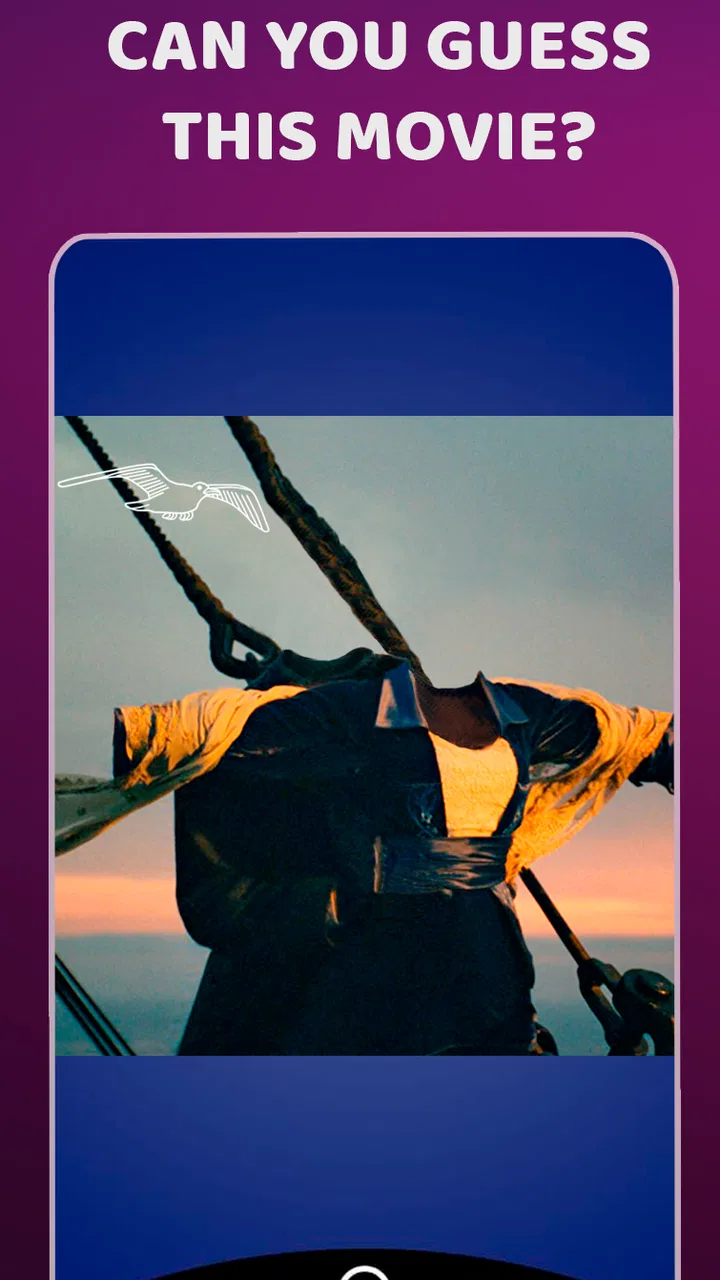
I found CineGhost Movie Picture Trivia most enjoyable when I treated it as a quick film challenge rather than a full movie database or a long-form quiz show. The idea is simple: identify a movie from a single scene image. That narrow format gives it an immediate appeal for film fans, but it also creates a particular kind of difficulty. You are not recalling a plot summary or answering a question with several clues; you are reading a visual moment and deciding whether your memory recognizes it.
That makes each round feel personal. A familiar actor, location, costume, lighting style, or prop can make an answer obvious, while a less memorable frame can leave me relying on instinct. I like that tension because it rewards genuine movie knowledge without requiring a complicated interface. At the same time, anyone expecting a broad trivia game with many question types may find the experience more focused than anticipated.
Getting past the first points of friction
The first thing I would tell a new player is not to rush through the image. The obvious temptation is to look for a famous face, guess quickly, and move on. That works occasionally, but a scene can reveal more through its background and visual mood than through its central character. I found it useful to scan the whole picture before committing: check the setting, clothing period, color palette, camera style, and any object that might place the scene in a particular film.
You May Also Like

 Blood Strike: 2.5 Anniversary
Blood Strike’s Loadouts Turn Every Drop Into a Tactical Gamble
A close look at Blood Strike’s custom loadouts: how fast access to signature weapons reshapes its battle royale rhythm, rewards preparation, and narrows the gap between fights.

 Pandora - Music & Podcasts
Pandora’s Music Is Easy to Start, but Harder to Recover
Pandora’s strength is its low-effort path from a seed to a station. Its weak spot is how much confidence it asks you to place in connection, setup, and quiet recovery.

 8 Ball Pool
 Is Built on Rivalries, Rematches, and Routine
A close look at the rivalries, rematches, shared routines, and unanswered safety questions that turn a quick pool match into a persistent mobile community.

 Samsung Music
’s Quiet Strength Is Playing What You Already Own
Its reach comes less from spectacle than from dependable access to a personal library. That simplicity is both the app’s strongest retention engine and its ceiling.

 AccuWeather: Weather Radar
AccuWeather Review: A Quick, Clear Forecast for Everyday Decisions
For everyday plans, the best forecast is the one you can understand quickly. AccuWeather makes rain timing, radar, and local conditions easy to act on, with a few trade-offs.

 Hill Climb Racing
Why Hill Climb Racing Still Turns Crashes Into One More Run
A tiny car, a bumpy hill and one more upgrade: Hill Climb Racing keeps resurfacing because its simple chaos makes every near-miss feel personal.
More From Our News Desk
View All News


This matters especially when the screenshot does not feature a recognizable star. A dark interior, an unusual landscape, or a distinctive costume may be the real clue. I also noticed that memory works differently here depending on how I watched a film. Movies I had seen recently were not always the easiest. Sometimes an older favorite came back immediately because its visual identity was stronger.
Another likely sticking point is the expectation that every picture will offer a fair, obvious clue. Picture trivia is naturally uneven. One image may trigger instant recognition, while another may only feel familiar. I do not see that as a flaw by itself, but it means the game is better suited to players who enjoy uncertainty. If you dislike making an educated guess, the single-scene format can become frustrating rather than relaxing.
There is also a practical social use for the game. I can imagine opening it during a quiet moment with friends and passing the phone around, especially when everyone has different movie tastes. The strongest player is not necessarily the person who remembers release details; it may be the person with the best visual memory. That makes the challenge more balanced than a quiz built entirely around obscure facts.
For solo play, I recommend using a short session rather than trying to force a long run. A few rounds fit naturally into a commute, a waiting room, or a break between tasks. Because the central action is so easy to understand, there is little learning curve. The real adjustment is learning how much confidence to place in a vague visual resemblance.
What to check before blaming the game
Before playing seriously, I would make a few basic checks. CineGhost is free to install, although its listing includes in-app purchases ranging from around one and a half dollars to nearly twenty-nine dollars per item. That is worth keeping in mind before handing the device to a child or treating the game as completely purchase-free. The content rating is Teen, so it is not something I would automatically choose for younger children without checking whether it suits them.
The game is presented for offline play, which is one of its most useful qualities. I would still open it once while connected after installation, let the initial setup finish, and try a round before relying on it somewhere without a connection. That simple test separates ordinary first-run preparation from a genuine problem later. It also avoids discovering at the airport, on a train, or in another low-connectivity place that the app has not completed its initial setup.
Device compatibility is another sensible starting point. The current version is 2.1.5 and supports Android 7.0 or later. If the app refuses to install or behaves strangely, checking the operating system is more productive than repeatedly reinstalling it. Older devices may also have limited storage or aggressive background management, so I would close other demanding apps and restart the phone before assuming the trivia game itself is broken.
The developer is Stefano Solinas, and the game has been available since April 20, 2020. It has passed the ten-thousand-install mark, which suggests a real audience without making it one of the enormous mainstream quiz platforms. I mention that because expectations matter: this feels like a focused movie puzzle from an individual developer, not a huge entertainment service with a broad support ecosystem.
If the screen appears blank, the image loads slowly, or a round seems not to respond, I would first check the basics: confirm that the app is the current version, close and reopen it, and restart the device. I would also make sure the phone is not in an unusual battery-saving state that suspends apps aggressively. These are ordinary checks, but they are often enough to distinguish a temporary device issue from a repeatable game problem.
A better way to recover a stalled session
When a round does not behave as expected, I prefer a controlled recovery instead of tapping randomly. First, I would wait briefly to see whether the screen finishes updating. If nothing changes, I would leave the game and reopen it. Then I would test a fresh round rather than repeatedly returning to the same point. This gives a clearer answer about whether the problem is tied to one session or affects the whole app.
I would avoid clearing storage immediately. That can remove local progress or settings, and it is a heavy step for a game that may only need a restart. If the issue returns after reopening, I would check available device storage and confirm that the operating system meets the Android 7.0 minimum. Only after those steps would I consider reinstalling, and I would do that with the understanding that locally stored progress may not survive.
The offline design changes how I think about recovery. If I am playing without a connection and something looks incomplete, I would not immediately conclude that the game requires constant internet access. I would reconnect when convenient, launch it again, and allow the app to settle before testing offline play once more. That approach is especially useful after installing on a new phone or after a system update.
There is a useful distinction between a difficult image and a malfunctioning round. If the picture is visible and the controls respond, the challenge is probably doing what it is meant to do, even if the answer feels unfairly obscure. I would give myself a moment to examine the frame before treating uncertainty as a technical fault. This sounds minor, but it prevents a lot of unnecessary troubleshooting in visual trivia games.
For group play, recovery is even simpler: if a round creates disagreement, move to the next challenge instead of letting one uncertain image dominate the session. The value of CineGhost in that setting comes from conversation and recognition, not from proving that every player can solve every frame. I found that accepting a few misses keeps the atmosphere light.
When the phone, connection, or expectations are the real issue
Not every poor experience points to the app. A dim display can make a dark movie frame nearly impossible to read, while strong glare can hide small visual details. Before judging the image quality, I would adjust brightness and viewing angle. This is particularly relevant when playing outdoors or on a phone with a small screen.
Performance can also be affected by the device itself. An older phone with little free storage, many background processes, or an outdated system may make any game feel less responsive. Since CineGhost is designed around recognizing pictures, a delayed image or a screen that takes time to refresh can make the challenge feel harder than it really is. Restarting the phone and closing unused apps are reasonable first steps.
Offline play is a strong fit for travel and low-signal situations, but I would not confuse it with immunity from every network-related problem. Installation, updates, and any store-related purchase process normally depend on the device environment outside the actual round. If the game works offline but an update will not complete, I would look at the app store connection and device storage rather than the trivia content.
Expectations are perhaps the biggest source of disappointment. This is a movie-picture quiz, not a streaming app, a film recommendation engine, or a replacement for a detailed movie encyclopedia. It will not satisfy someone who wants cast biographies, plot explanations, trailers, or a deep catalog of film facts. I would choose a conventional movie database for those needs and keep CineGhost for recognition-based play.
It is also not the best choice for players who want constant variety in question formats. Traditional trivia alternatives can ask about directors, dialogue, soundtracks, release years, awards, and character names. Those games offer broader knowledge testing. CineGhost has a clearer identity, but that identity is also its limitation: the picture is the center of everything.
On the other hand, the focused format makes it easier to play casually. I do not need to study rules or learn a complicated scoring system before starting. A film fan can pick it up and immediately test memory. That simplicity is more valuable than it sounds when I want a short distraction rather than another app that demands a long commitment.
Small habits that make the picture challenge fairer
My most useful habit was separating recognition from confirmation. When a scene felt familiar, I tried to name the movie silently before looking for additional clues. If I could identify the setting, tone, and likely period but not the title, I treated that as partial progress rather than a reason to guess wildly. This helped me avoid locking onto the first film that shared a similar visual style.
I also found it helpful to think in categories instead of titles. Ask whether the image suggests a historical drama, a science-fiction setting, a crime story, a comedy, or a horror scene. Then narrow by visual details. This is not a hidden feature; it is a practical way to use the information already present in a single frame. It works particularly well when the actor is unfamiliar.
For a group, I would give everyone a few seconds of silent viewing before allowing discussion. Otherwise, the most confident person can shape everyone else’s memory, even when the first guess is wrong. A rotating spokesperson or simultaneous guesses on paper would make the session more balanced. That turns a simple phone game into a better shared activity without requiring any extra equipment.
I would also avoid using it as a test of someone’s general film intelligence. A player who misses a frame may know more about cinema than someone who guesses correctly through visual familiarity. The game measures a specific skill: connecting an isolated image with a remembered movie. Understanding that trade-off makes the results more enjoyable and prevents the challenge from feeling like a judgment.
Another practical tip is to play in the right environment. A quiet room with a reasonably bright screen is better than a noisy, moving vehicle where the image is hard to study. The offline capability makes travel possible, but the best experience still depends on being able to look carefully. If I only have a few seconds and poor visibility, I am testing my circumstances as much as my movie memory.
Who should install it, and who should choose something else?
I would recommend CineGhost to someone who enjoys identifying films from posters, stills, costumes, and visual atmosphere. It is especially suitable for short sessions, casual challenges between friends, and offline entertainment when I do not want to stream video or use a data-heavy service. The free entry point makes it easy to try, while the focused concept tells me quickly whether the game matches my interests.
It is less suitable for a player who needs detailed explanations after every answer or prefers trivia based on facts rather than images. Someone who wants a structured learning tool for film history would probably get more value from a broader quiz or reference app. Likewise, a person who dislikes uncertain guesses may find the one-scene format too dependent on memory and visual context.
Parents should pay attention to the Teen content rating and the possibility of in-app purchases. That does not automatically make the game inappropriate, but it does mean I would review the device’s purchase controls before letting a younger family member play. The game is free, yet “free” does not mean every optional transaction is absent.
The modest install footprint in the store audience also helps set expectations. I would not compare it directly with the biggest trivia brands that offer enormous communities, frequent social competition, or many categories. Its appeal is more personal and compact. If I want a quiet movie-memory exercise, that can be an advantage; if I want a crowded competitive platform, it is probably the wrong destination.
In everyday use, I can see it working well during a lunch break. I could open it for a few rounds, challenge a colleague who likes films, and close it without needing to arrange a full game night. On a trip, the offline option gives it a practical role when signal is unreliable. At home, it can fill the gap between choosing a movie and actually starting one, especially when everyone is arguing about who remembers a particular scene.
My practical verdict after using it
CineGhost succeeds because it commits to one clear idea and makes that idea immediately understandable. I like the directness: look at a scene, trust your memory, and decide. The game does not need a complicated explanation to become entertaining, and its offline orientation makes it more useful than many casual quiz apps when connectivity is inconvenient.
Its main weakness is the same feature that gives it character. A single image can be exciting when it clicks and irritating when it does not. Players who want broad trivia coverage, detailed film information, or consistently obvious clues should choose a different kind of app. I would also approach purchases carefully and complete the basic installation and offline test before relying on it during travel.
After those qualifications, I think it is worth trying for film fans who enjoy visual recall more than fact memorization. My advice is to play slowly, inspect the entire frame, and treat difficult rounds as conversation starters rather than personal failures. The best reason to keep it installed is its ability to turn one movie scene into a quick, shareable memory test. For that specific purpose, Stefano Solinas’s free trivia game offers a pleasant and practical option, provided you want a focused picture quiz rather than an all-purpose cinema companion.
FAQs for CineGhost Movie Picture Trivia
01What is CineGhost Movie Picture Trivia?
CineGhost Movie Picture Trivia is a movie-themed quiz game that challenges players to identify films from visual clues, images, or picture-based prompts. It is designed for cinema fans who enjoy testing their knowledge of actors, characters, scenes, and popular movie titles. The game is generally easy to understand, although some questions may become surprisingly difficult as the levels progress.
02How does the gameplay work in CineGhost Movie Picture Trivia?
The main gameplay revolves around examining a movie-related picture and selecting or entering the correct answer. Depending on the challenge, you may need to recognize a film, actor, character, or memorable cinematic moment. The controls are simple and suitable for short sessions, making it convenient to play casually. However, success depends heavily on your familiarity with both mainstream and less obvious movies.
03Is CineGhost Movie Picture Trivia suitable for beginners and casual players?
Yes, the game is suitable for casual players because its basic mechanics are straightforward and do not require previous experience with trivia apps. Early questions usually help you understand how the visual clues work, while later challenges test more detailed film knowledge. Players who are not major movie fans may occasionally need hints or outside research, especially when the images are subtle.
04Does CineGhost Movie Picture Trivia require an internet connection?
Whether an internet connection is required can depend on the version of the app and the feature you are using. Basic quiz content may be available without constant connectivity, but advertisements, updates, online rankings, or additional content could require internet access. Before downloading, it is worth checking the store listing and testing the game offline if you plan to play while traveling.
05Are there advertisements, in-app purchases, or privacy concerns?
As with many free trivia games, CineGhost Movie Picture Trivia may include advertising or optional purchases, depending on the platform and current release. Ads can help support free access but may interrupt the experience between questions. Before installing, review the Google Play or App Store information for pricing, permissions, data collection, and purchase details, particularly if children will be playing.
Pros
- Quick trivia rounds are ideal for short breaks or casual play.
- Movie-focused questions suit film fans and entertainment enthusiasts.
- Simple gameplay makes it easy to start without a lengthy tutorial.
- Can help refresh your memory of actors
- titles
- and iconic films.
- A lightweight concept may appeal to users seeking a straightforward quiz app.
Cons
- Question difficulty may vary
- making some rounds feel unbalanced.
- Players wanting broader TV or pop-culture trivia may find the scope limited.
- Repeated questions could reduce replay value over time.
- Trivia answers may depend on regional movie titles or release differences.
- The experience may feel basic for users expecting advanced quiz features.

CineGhost Movie Picture Trivia
Gallery